Flip the Bottle Over: A Plain-English Decoder for the Anti-Aging Aisle
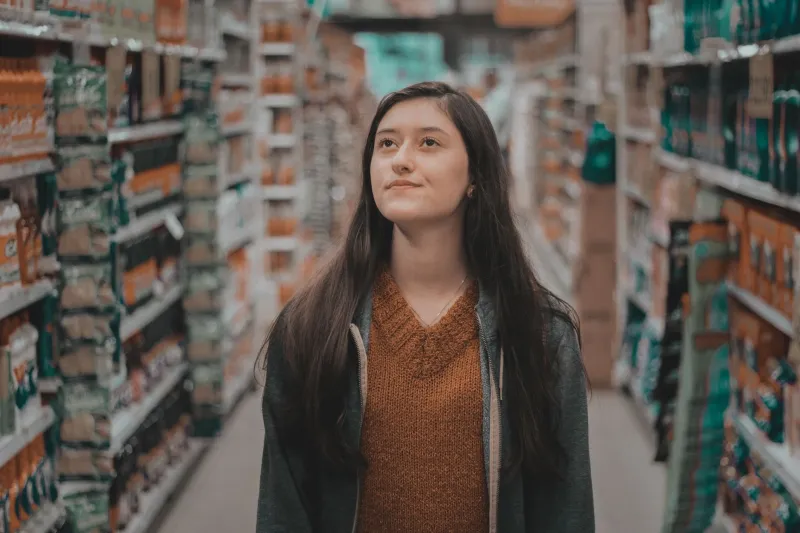
Stand in the anti-aging aisle of any CVS, Target, or Ulta in America and you'll swear you need a chemistry degree. Retinol 0.3%, 0.5%, 1%. 'Clinical-strength.' 'Medical-grade.' 'Dermatologist-tested.' It's a wall of confident language — and most of it is saying far less than you think.
Here's the good news: decoding it takes about ten minutes. Let's do that.
What Retinol Percentages Actually Mean (and Don't)
Retinol is the gold-standard over-the-counter ingredient for fine lines, uneven texture, and dullness — but the number on the bottle isn't a potency dial the way you'd expect.
- 0.25%–0.3% is the classic starting point. For most people, this is plenty. Studies showing meaningful results often used concentrations in this range, and your skin can't use more than it can tolerate.
- 0.5% is a reasonable step up after several months if your skin has adjusted and you want a bit more oomph.
- 1% is about the ceiling for true retinol in OTC products. Beyond that, you're often looking at retinaldehyde, retinyl esters, or prescription-strength tretinoin — which is a different conversation with your dermatologist.
Here's the kicker: a well-formulated 0.3% product from a brand that invests in stabilization and delivery systems can outperform a poorly formulated 1% product that oxidizes in the jar. Concentration matters less than the formula around it. Higher isn't automatically better — it's just more likely to leave you flaky and red.
The move: start low, go slow, and give any retinol product a solid 12 weeks before judging it. That's how long skin cell turnover actually takes to show its work.
'Medical-Grade' Is a Marketing Word. Full Stop.
This one surprises people every time: the FDA does not define, regulate, or recognize the term 'medical-grade skincare.' Neither does 'clinical-strength,' 'cosmeceutical,' or 'pharmaceutical-grade.'
These phrases live in the same legal neighborhood as 'artisanal' on a bag of chips. A $200 cream sold through a med spa and a $15 cream at Walgreens are regulated under the exact same FDA rules for cosmetics. Neither can legally claim to treat a medical condition without becoming a drug — which requires actual approval.
What is worth looking for instead:
- 'Dermatologist-tested' — weak, but it means at least someone with credentials touched the process. 'Dermatologist-approved' or 'recommended' means even less.
- 'Clinically tested' — check whether the brand says what was tested and on how many people. 'Clinical results' with no numbers is decorative language.
- 'Hypoallergenic' — again, undefined by the FDA. Anyone can print it.
A third-party clinical study with published participant counts? That's signal. A serif font that looks like a pharmacy label? That's design.
The Buzzword Bingo Card
Keep an eye out for these aisle regulars, none of which carry regulatory meaning:
- 'Clean' — no legal definition. A 'clean' formula can be great or garbage.
- 'Non-toxic' — implies everything else is toxic, which isn't how any of this works. Dose makes the poison, as toxicologists love to say.
- 'Anti-aging complex' — a proprietary blend where the ingredient list order tells you the real story. If the hero ingredient is listed after the preservative, there's likely a sprinkle of it in there.
- 'Instant results' — usually means silicones or humectants plumping the surface temporarily. Lovely, but it's a costume, not a renovation.
None of these words mean a product is bad. They just mean the words are doing the selling instead of the formula.
How to Read a Label Like an Insider
Flip the bottle over and ignore the front entirely. On the back:
- Check the first five ingredients. They make up the bulk of the formula. If you're paying premium prices, you want actives showing up early.
- Look for packaging that protects the formula. Retinol and vitamin C degrade with light and air. Opaque tubes and airless pumps beat clear jars every time.
- Match the product to one job. A single hero active per product is easier to troubleshoot than a 'miracle complex' of twelve.
A No-Nonsense Anti-Aging Shelf
If we stripped the average bathroom counter down to what genuinely earns its spot, it would look like this:
- A broad-spectrum SPF 30+ — the single most effective anti-aging product ever sold in the US, at any price point. Nothing else comes close.
- A retinol product starting at 0.25%–0.3%, used a few nights a week and built up gradually.
- A basic moisturizer with ceramides or glycerin to keep your skin barrier happy while the retinol does its thing.
- Optionally, a vitamin C serum in the morning for antioxidant support.
That's it. Everything else is optional — and the aisle would be a lot less overwhelming if more brands admitted it.
The Bottom Line
The anti-aging aisle sells confidence in a bottle, and there's nothing wrong with wanting it. But confidence should come from the ingredient list, not the adjectives on the front. Flip the bottle over, start low with your retinol, side-eye anything 'medical-grade,' and let your sunscreen do the heavy lifting. Your skin — and your wallet — will both look better for it.