The Cold Truth About Skincare Fridges: What Actually Belongs Inside
There is a certain fantasy attached to the tiny skincare fridge. You open the door, a soft light spills out, and a row of glass bottles looks like it belongs in a boutique hotel. It feels expensive. It feels serious. It feels like the beginning of better skin.
The reality is less cinematic and more practical. A skincare fridge is simply a small cooler. It can slow down some types of ingredient breakdown and make certain textures feel nicer going on. It cannot sterilize products, revive an expired serum, or force active ingredients deeper into your skin. Whether it is worth the counter space in 2026 depends entirely on what you put inside it.
First, What Cold Can and Cannot Do
Cold slows chemical reactions and makes it harder for many microorganisms to multiply. That is why food goes bad more slowly in the refrigerator. Cosmetics are not food, though, and they are formulated with preservatives and stability testing that assume normal indoor storage.
A fridge can be helpful for a few unstable formulas. It can also create new problems, like condensation, temperature swings every time the door opens, and a false sense of security. A product stored at 40 degrees Fahrenheit is not automatically safer than one stored in a dark cabinet at 68 degrees. Clean hands, closed lids, and sensible shelf life still matter more than chill.
The Formulas That Genuinely Like the Chill
The strongest case for refrigeration is vitamin C, especially L-ascorbic acid serums. These formulas are famously prone to oxidation, which shows up as a darker orange or brown color and a weaker performance over time. Cooler storage can slow that process, particularly for an opened bottle. It is not a forever fix, but it can buy you a little more usable time.
Products that explicitly say to refrigerate should go in the fridge. That sounds obvious, but people sometimes treat the label as a suggestion. Follow it. The same goes for certain fresh-feeling gel masks, sheet masks, and water-based formulas with delicate actives if the brand recommends cool storage.
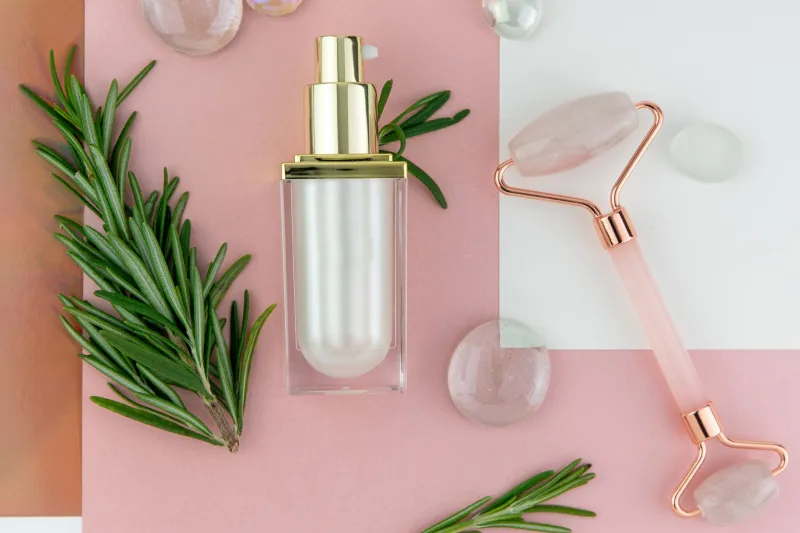
Chilled jade rollers, gua sha tools, and gel eye masks are a different category. They can feel soothing and may temporarily reduce puffiness through cold constriction. That is a comfort and appearance trick, not a long-term anti-aging strategy. Enjoy it for what it is.
What Does Not Need the Cold
Most cleansers, moisturizers, facial oils, balms, clay masks, and sunscreens are designed to live at room temperature. Sunscreen in particular should stay out of a hot car and out of direct sun, but it does not need to sit next to your leftovers. Many sunscreens are emulsions, and repeated temperature changes can affect texture and spreadability.
Oils and balms can turn cloudy or grainy in the cold. Clay masks can thicken. Some emulsions may separate if they are repeatedly warmed and chilled. None of that is dangerous, but it is annoying, and it can make a perfectly good product harder to use.
Retinol is a bit of a middle case. It is sensitive to light and air, so a dark, dry cabinet is usually enough. If your bathroom gets steamy every morning, a cooler spot may help, but a dedicated mini fridge is not mandatory. Keep the cap tight and use it within the recommended period after opening.
Where the Mini Fridge Goes Wrong
A skincare fridge placed in a hot, humid bathroom is not doing your products many favors. Every opening lets in warm air, which can create condensation on bottles and tools. Water droplets invite contamination, especially if you are dipping fingers into jars. If you use a fridge, keep products sealed, wipe down the interior, and do not store them in the door where temperatures swing the most.
Do not store skincare next to food, and do not treat the fridge as a sterilization chamber. Cold slows some microbes, but it does not kill them. A serum that was contaminated by dirty fingers is still contaminated. A product past its expiration date is still past its expiration date.
And please, do not put a product in the fridge to rescue it after it has been sitting in a hot car for a week. Stability does not work backward like that.
A Simple US-Friendly Storage Cheat Sheet for 2026
- Chill it: opened L-ascorbic acid serums, products labeled refrigerate, and gel or sheet masks if the brand allows it.
- Keep it cool and dark: retinoids, antioxidant serums, and anything in a clear bottle that you want to protect from light.
- Leave it at room temperature: cleansers, moisturizers, facial oils, balms, clay masks, sunscreen, and most acne treatments unless the label says otherwise.
- Skip the fridge entirely: unopened products with long shelf lives, anything you are storing for aesthetics only, and products you will forget about for months.
Does the Chill Actually Change Your Glow?
Not directly. There is no evidence that cold storage makes a moisturizer more hydrating or a serum more effective in a lasting way. The temporary de-puffing from a chilled tool is real but short-lived. The long-term glow still comes from the unglamorous stuff: sunscreen every morning, a routine you can actually stick to, enough sleep, and not irritating your skin barrier with too many actives at once.
If a skincare fridge helps you keep your vitamin C fresh, makes your morning routine feel a little more enjoyable, or stops you from leaving actives in a steamy bathroom, it can earn its spot. If it is mostly a $150 display case for products that would be fine in a drawer, that is okay too. Just call it what it is.
The Bottom Line
A skincare fridge is a tool, not a shortcut. Use it for the few formulas that benefit from cooler storage, keep everything clean and sealed, and do not expect the appliance itself to deliver a glow. In 2026, the smartest splurge is still a sunscreen you will actually wear, not a mini fridge you will forget to wipe down.