Time for a Supplement Shelf Audit? What's Actually Worth Buying in 2025
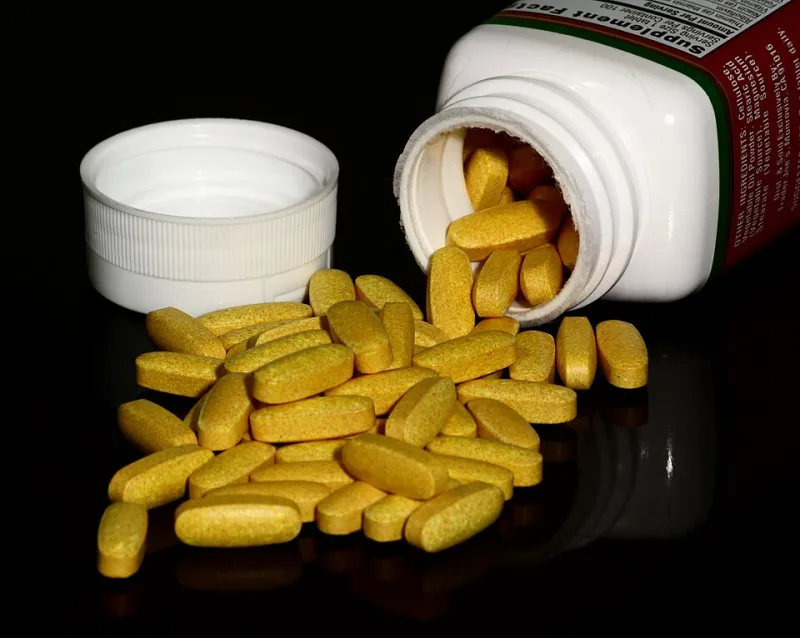
Photo: Ragesoss, CC BY-SA 3.0, via Wikimedia Commons
Somewhere in your kitchen right now, there's probably a bottle of something you bought after a late-night scroll — a gummy, a capsule, a powder promising more energy, better sleep, or a sharper brain. You're not alone: surveys suggest more than half of American adults take at least one dietary supplement. But how many of those bottles are earning their shelf space?
Time for an audit. Here's how to sort the keepers from the clutter.
The Keep, Toss, Reconsider Framework
Before we get to specific supplements, here's the system. Grade every bottle in your cabinet on three questions:
- Evidence: Does solid human research support the claim for someone like you?
- Bioavailability: Is the form actually absorbable, or are you buying expensive urine?
- Value: Could you get this nutrient more cheaply (and tastily) from food?
- Keep: Strong evidence, good absorption form, fills a real gap in your diet.
- Toss: Weak evidence, poor absorption, or duplicating something you already get enough of.
- Reconsider: Some evidence, but you might not need it — or a better form exists.
Now let's apply it to the big names on US shelves.
The Grades, Supplement by Supplement
Vitamin D — KEEP (for many of us)
With much of the US getting limited sun for a good chunk of the year, vitamin D deficiency is genuinely common. If your levels are low, supplementation is inexpensive and well-supported. Ask your doctor for a simple blood test rather than guessing.
Creatine — KEEP
No longer just for gym bros. Creatine monohydrate is one of the most studied supplements on the market, with benefits for strength, muscle maintenance, and emerging research on cognitive function. It's also remarkably cheap. Look for plain creatine monohydrate — skip the fancy blends.
Omega-3s (Fish Oil) — RECONSIDER
The evidence for omega-3s in people with existing heart disease is solid, but for the general healthy population, results are mixed. If you eat fatty fish twice a week (salmon, sardines, mackerel), you may not need the capsule. If you do supplement, check the EPA and DHA content on the label, not just the total fish oil amount.
Multivitamins — RECONSIDER
A basic multivitamin is a reasonable insurance policy for picky eaters or restrictive diets, but it's not a substitute for vegetables, and mega-dose formulas can be counterproductive. Choose one at or near 100% of the daily value, not a 5,000%-everything bomb.
Biotin Gummies for Hair and Nails — TOSS
Unless you have an actual biotin deficiency (rare in the US), extra biotin does little for hair and nails — and it can interfere with certain lab tests, including some thyroid panels. This is one of the most oversold supplements in America.
Turmeric/Curcumin Capsules — RECONSIDER
There's real anti-inflammatory research here, but curcumin is poorly absorbed on its own. Formulas with piperine (black pepper extract) or lipid carriers absorb far better. If your current bottle is cheap curcumin with nothing else on the label, it's a toss.
Probiotics — RECONSIDER
Strain matters enormously, and many shelf products don't match the strains used in studies. Fermented foods like yogurt, kefir, and kimchi may deliver similar benefits for less money. If you take one for a specific reason, verify the strain names on the label.
Red Flags When Shopping Online
Supplements aren't FDA-approved before hitting the market, so the burden of quality falls on you. Watch for:
- Miracle language: "Cures," "detoxes," "melts fat" — hard pass.
- No third-party testing: Look for USP, NSF, or Informed Choice seals.
- Proprietary blends: If doses are hidden, you're often getting fairy dust amounts.
- Influencer-only brands: A celebrity endorsement isn't a clinical trial.
- Subscription traps: Check the fine print before that "free trial" auto-renews.
The Bottom Line
The best supplement routine is the boring one: fill genuine gaps, choose well-absorbed forms, buy from brands that test their products, and let food do the heavy lifting. Ten minutes with your shelf — and this framework — could save you hundreds of dollars a year and a whole lot of clutter. And as always, run your list past your doctor or a registered dietitian, especially if you take medications.