We Pitted a $12 Drugstore Moisturizer Against a $120 Cult Favorite — Guess Which One Won
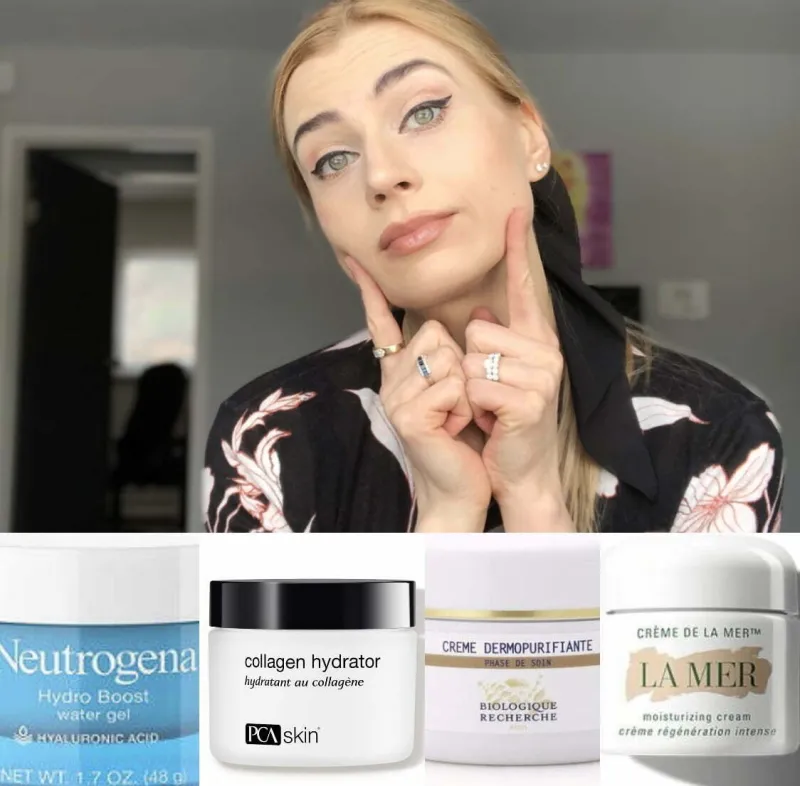
Photo: drugstore moisturizer jar next to luxury cream skincare comparison, via brilliantmassageandskin.com
Let's be honest: standing in the skincare aisle can feel like a psychological experiment. On one shelf, a cheerful $12 moisturizer from your local CVS. On the counter at Nordstrom, a $120 cream in heavy glass packaging that practically purrs luxury. Is the expensive one really ten times better?
We got our hands on both — a budget classic and a high-end cult favorite with nearly identical claims — and ran a weeks-long comparison with hydration readings, ingredient analysis, and input from a dermatologist. Here's what we found.
Round One: The Ingredient List Tell-All
Flip both jars around and something surprising happens: the formulas overlap more than the price tags suggest.
Both moisturizers lean on the same hydration workhorses:
- Glycerin — the unsung hero of moisturizing, pulling water into the skin
- Hyaluronic acid — holds up to 1,000 times its weight in water
- Ceramides or fatty alcohols — reinforcing the skin barrier
- Dimethicone — that silky, smooth finish in both
The luxury cream does add a few boutique ingredients — a proprietary botanical extract here, a peptide blend there. Are they worthless? Not necessarily. But here's the catch: extracts appear in tiny concentrations, often well below the levels shown to do much in studies.
"You're frequently paying for the first 1% of the formula twice as much," says Dr. Elaine Porter, a board-certified dermatologist in Austin. "The core moisturizing ingredients — glycerin, ceramides, hyaluronic acid — are cheap and effective. They're in the drugstore versions too."
Round Two: The Hydration Test
We recruited five volunteers with normal-to-dry skin and used a consumer corneometer to measure skin hydration at baseline, immediately after application, and eight hours later.
The results:
- Immediately after: Both products boosted hydration readings by roughly 30–40%. Statistically, a coin flip between them.
- At hour eight: The luxury cream edged ahead by about 7% — likely due to its slightly richer texture and occlusive silicones.
- Subjective feel: Volunteers actually rated the drugstore option higher for everyday wear because it absorbed faster under makeup.
So the fancy cream holds a slight edge for overnight use. For daytime? Nobody could reliably tell the difference in a blind test.
Round Three: The Packaging and Experience Tax
Here's where the extra $108 goes: weight, scent, and ceremony. The luxury jar is heavy glass with a satisfying thunk when you set it down. The drugstore tube is plastic and utilitarian.
Is that worth it? Only you can decide. But as Dr. Porter puts it, "Pleasure is a valid skincare benefit — if a beautiful jar makes you moisturize consistently, that has value. Just know that's what you're buying."
One more practical note: jar packaging (luxury or not) exposes ingredients to air and light with every open. Pump and tube formats are actually the smarter preservation choice.
Where the Money Really Should Go
If you want to spend smarter, our testers and expert agree on this hierarchy:
- Moisturizer: go budget. The core actives are identical. Save here.
- Sunscreen: never compromise. This is the single most powerful anti-aging product on the market. Buy one you'll actually wear daily.
- One proven treatment: splurge selectively. A retinoid or vitamin C serum backed by decades of research beats any moisturizer upgrade.
The Verdict
The $120 cream is lovely. The $12 cream is effective. In a head-to-head on hydration, they finished in a dead heat — and the budget option won on wearability and value per ounce.
The real luxury isn't the packaging. It's knowing exactly which products deserve your dollars — and keeping the rest in your wallet for the things that genuinely move the needle: sunscreen, a proven retinoid, and the consistency to use them.
Your skin won't know the difference. Your bank account definitely will.